Offices
Johannesburg, South Africa
Dakar, Senegal
Nairobi, Kenya
By the Numbers
Expenditures by Year

Open Society–Africa works with a range of civil society groups to promote just democracies and economic policies that advance equality.
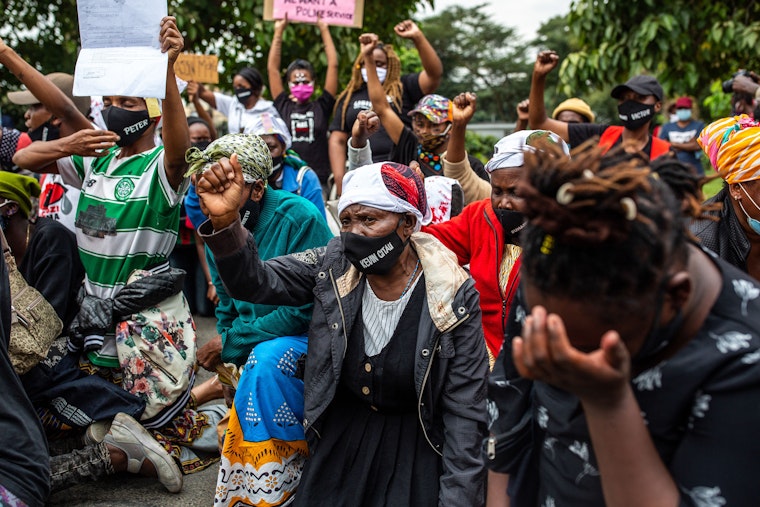
We strive to amplify people’s voices, through conscious organizing, to express themselves and participate in public life, to challenge and disrupt the exercise of unchecked power, and to hold public and private institutions to account for their actions. In Kenya and South Africa, for instance, we have supported “citizen audit” programs, where local groups use publicly available information on government contracts and plans to check on whether the promised goods and services—from schools to lavatories—were actually built and to what standards.

Against the background of instability in the southern Sahel, in Central Africa, in the Horn of Africa, and in other geographies, we support groups that take a rights-based approach to security sector governance and accountability, and that work to counter militarism. This includes advocating for full civilian control of military institutions and countering efforts to use claimed threats to national security to undermine democratic institutions and accountability.
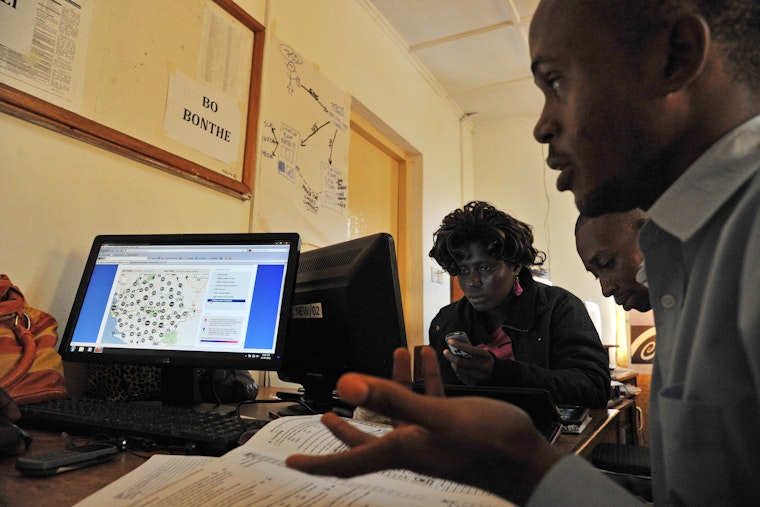
We support groups that promote accountable, just, and inclusive democracies governed by law in which rights are promoted and protected. This includes our work to promote free, fair, and peaceful elections, such as the creation of a web-based “situation room” that supports election monitoring efforts by independent civil society groups during recent elections in Nigeria and Senegal.

Open Society–Africa supports progressive economic and social norms, policies, and practices that create opportunity and promote equality and rights. This has shaped our response to the COVID-19 pandemic, which underline deep global inequalities—versus the countries of the Global North—in access not just to vaccines, but also to diagnostic testing and treatments, particularly in Africa. We are pushing to expand affordable access to health care with a drive to support Africa-based research, development, and manufacturing enterprises that will form the basis of resilient, secure, and effective health care delivery.
George Soros began his philanthropy in South Africa, giving scholarships to Black South African students in 1979. The Foundations’ work in Africa has expanded dramatically since then, and notably provided support to a range of civil society groups that helped drive a wave of democratic change starting in the 1990s.
With the end of apartheid, we opened our national foundation in South Africa in 1993, followed by our first African regional foundation—the Open Society Initiative for Southern Africa—in 1997. Our Open Society Initiative for West Africa, based in Dakar, followed in 2000. The Open Society Initiative for Eastern Africa opened its doors in Nairobi in 2005, after Kenya held multiparty elections in 2002. In 2022, the separate regional foundations merged into a single regional entity: Open Society–Africa with offices in Dakar, Nairobi, and Johannesburg.
Highlights of Our Work in Africa
Starting to Build a More Open World

Nurturing Democracy and Addressing Inequality in Post-Apartheid South Africa
Expanding Open Society Work in Africa
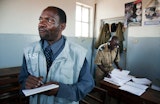
Helping People Living with HIV and TB in Africa
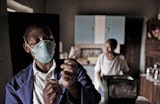
Supporting Development in Post-Conflict Sierra Leone and Liberia
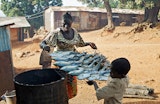
Holding Soldiers Accountable for Rape in the Democratic Republic of Congo
Reducing Harm from Drug Use

Read more
Hate Speech
In Africa, Taking on Viral Hate
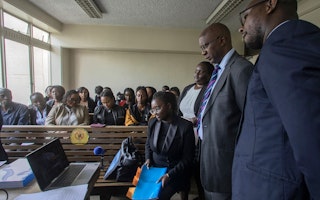
Facebook users in some African countries are exposed to higher levels of violent content, hate speech, and misinformation. The consequences can be deadly. A legal challenge seeks to force the social media giant to fix it.
Vaccine Justice
The Quest to Boost Africa’s Fight Against COVID-19

While Africa consumes 25 percent of the world’s vaccines, only one percent of vaccines are manufactured there. The mRNA vaccine manufacturing hub in South Africa is working to change that.
Vaccine Justice
Q&A: Africa’s Fight for Vaccine Equity
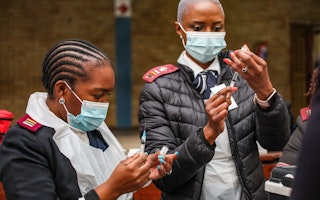
As the pandemic enters its third year, African Alliance founder Tian Johnson shares reflections on how to make progress in the push for vaccine equity and what African civil society organizations are asking for now.